Recipe trends may come and go (thanks, TikTok), but the classics are forever. And in a world where seemingly no one can agree on anything, we may have found a recipe that makes everyone happy. Well, everyone who eats meat: the most-reviewed recipe on our entire site is for Perfect Prime Rib Roast, and it’s racked up over 4,600 reviews, earning it a solidly respectable 4 out of 5 stars. The reason this iconic holiday roast recipe is so beloved is an unconventional cooking method that works every time.
How to Make Perfect Prime Rib Roast
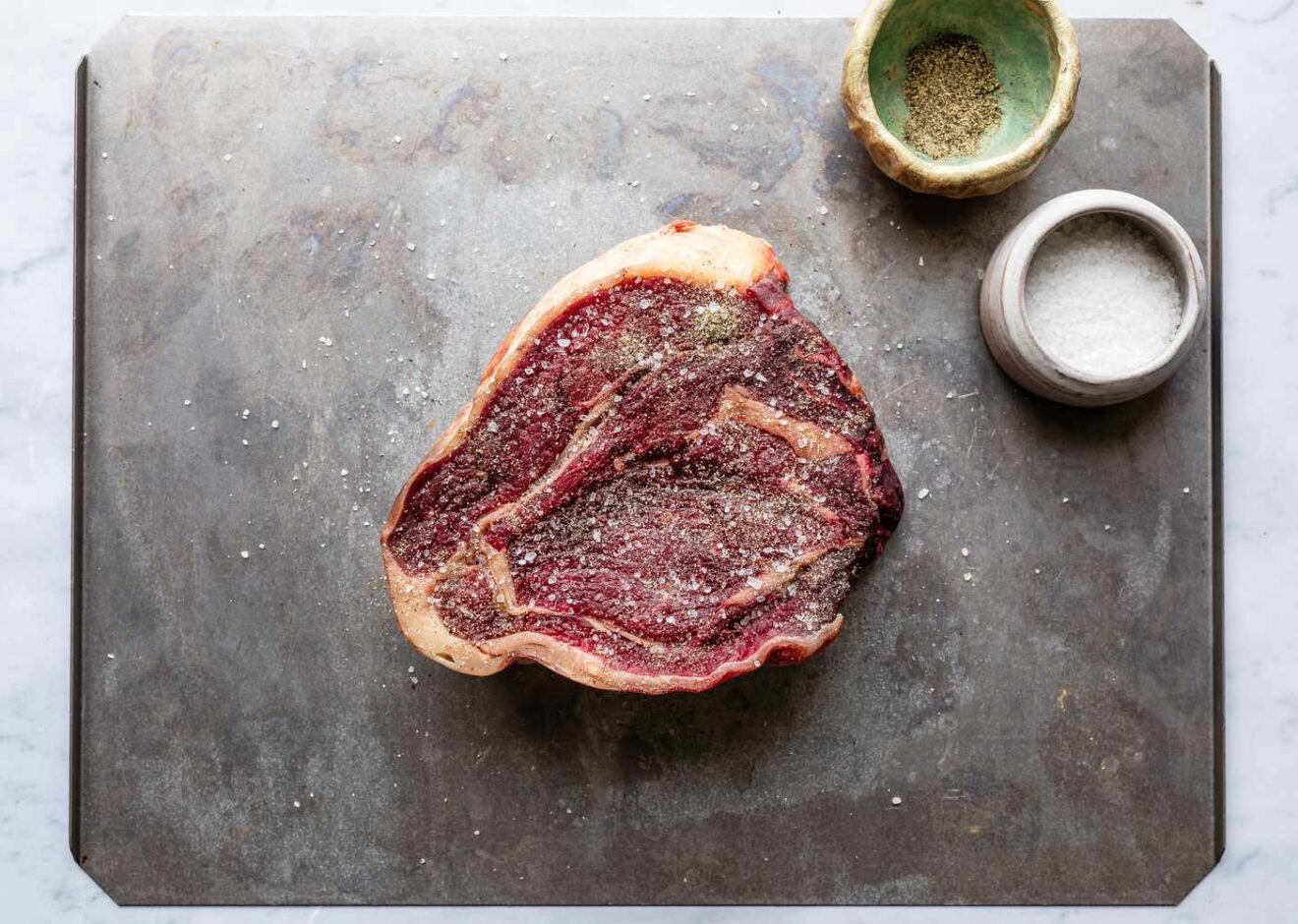
This recipe follows a technique called the “Closed Oven Method.” Here’s how to do it. First, get a 4-8 pound rib roast from your butcher. Let it sit, unwrapped, on a platter in your fridge overnight to dry out. The day of cooking, let it sit at room temperature for three hours (this is to take off the fridge chill). Season the roast with salt and pepper. Now it’s time for some math! Multiply the weight of your roast in pounds by 5 to determine the total roasting time in minutes.
Cook the prime rib on a roasting rack at 500 F for the pre-calculated time, then turn off the oven and wait for two hours. Resist the urge to open the door, because that will alter the temperature of the oven. If you’re entertaining, it may help to place a sticky note on the oven, deterring curious or helpful guests. “No matter how badly you want to open that oven to take a look… DON’T!!” advised one reviewer of this recipe. After two hours, remove the roast, carve, and serve.
kfsca platos y recetas / Cara Cormack
Secrets for Making the Best Prime Rib Roast
The high-heat initial cook is what gives this rib its gorgeous crust. The two-hour cool-down finishes the internal cooking, and doubles as a resting period for the roast—so there’s no need to further rest it once you remove it from the oven. If you’re concerned about temperature, you can use a probe thermometer to confirm your roast is at 130 F, a perfect medium-rare.
Like most places on the internet, the comments section of this recipe is an interesting source of intel! After reviewing the 225 (and counting) comments, we’ve learned two tips that are imperative for a picture-perfect roast every time.
1. Make sure your oven is correctly calibrated (and doesn’t have a cooling fan).
Some commenters noted this recipe didn’t work for them. Some reported that their roast overcooked, as with the reviewer who said, “In my oven the internal temperature got to 140 only 1 hr after turning off the oven.” Others had underdone roasts, like the reviewer who said, “Our roast was only sitting at 105 and very rare after using the exact time stated.” In both these scenarios, the likely culprit was an incorrectly calibrated oven. Many home ovens are not true to temperature. To avoid an over- or under-done roast, get an inexpensive oven thermometer. That will tell you exactly what the ambient temperature of your oven is, so you can adjust accordingly.
Additionally, as the recipe notes in its introduction, ovens with built-in cooling fans are not suitable for this recipe. Cooling fans quickly reduce the oven’s temperature once it has been turned off. The magic of this recipe lies within the residual heat, so if your oven does have a cooling fan, we suggest skipping this recipe.
2. This method works best with a 4-8 pound roast.
While there are some outliers (“I used this method for an 11 lb roast last year and it worked perfectly,” said one reviewer), our recipe developers and testers find this technique works best and most predictably within the weight range listed in the recipe” 4-8 pounds. “At 9.35 lbs would be too long at 500 and likely burn outside,” another reviewer responded to a commenter wondering about their slightly too-large roast.
If your roast weighs over 8 pounds, don’t be bummed: our traditional recipe for Prime Rib Roast is delicious. It relies on a slightly lower initial cooking temperature (450 F), and finishes the roast at 325 F.